
Introduction: The Real Struggle of New Websites
Launching a new website is exciting. You choose a design, publish content, add services, and start expecting results. But weeks pass, sometimes even months, and nothing really happens.
No rankings.
Very little traffic.
Almost no inquiries.
This is one of the most common frustrations for new website owners.
You may be doing everything right. You are writing blog posts, adding keywords, optimizing pages, and even improving your website speed. Still, Google does not seem to respond the way you expected.
At this point, many people start asking:
“Is SEO not working?”
“Is my website bad?”
“Why are my pages not ranking?”
The truth is, most new websites don’t fail because of poor effort. They struggle because Google does not trust them yet.
And trust is everything.
Google’s main goal is to show users safe, helpful, and reliable results. When a website is new, Google has very little information about it. It doesn’t know if the site is consistent, accurate, or trustworthy.
So instead of pushing it to the top, Google waits. It observes. It evaluates.
In this article, we’ll explain why Google doesn’t trust new websites at first and what you can do to build that trust faster.
Understanding How Google Builds Trust
Google does not trust a website just because it exists.
It builds trust slowly, based on signals.
These signals include:
-
Content consistency
-
Topic focus
-
Site structure
-
User experience
-
Website activity over time
Think of it like meeting someone new. You don’t trust them immediately. You observe their behavior, their actions, and their consistency before you feel confident.
Google works the same way.
A new website has no history. No pattern. No proven value. So Google needs time to understand:
-
What your website is about
-
Who it helps
-
How useful the content is
-
Whether users find it helpful
Until these signals become clear, rankings often stay low.
This is normal.
Reason #1 – No History, No Reputation
One of the biggest reasons Google doesn’t trust new websites is simple: they are new.
There is no track record.
Older websites have years of data behind them. Google has seen their content, tracked their updates, and observed how users interact with them.
A new site has none of that.
Google doesn’t know:
-
If you will continue updating content
-
If your information is accurate
-
If your website will stay active
Because of this, Google moves slowly.
This phase is often called the “trust-building period.” During this time, even well-optimized pages may not rank strongly.
It’s not a penalty. It’s just caution.
Reason #2 – Lack of Topical Authority
Topical authority is one of the strongest trust signals.
It means your website clearly focuses on one subject and covers it deeply.
New websites often make the mistake of publishing random topics. One article about SEO, another about marketing, another about design, then something unrelated.
This confuses Google.
When your content is scattered, Google struggles to understand what your site truly represents.
But when a website consistently publishes content around one clear topic, something powerful happens.
Google begins to recognize:
“This site is focused.”
“This site is building knowledge.”
“This site is serious about this subject.”
Over time, this builds authority.
New websites don’t have this depth yet. That’s why trust takes time to grow.
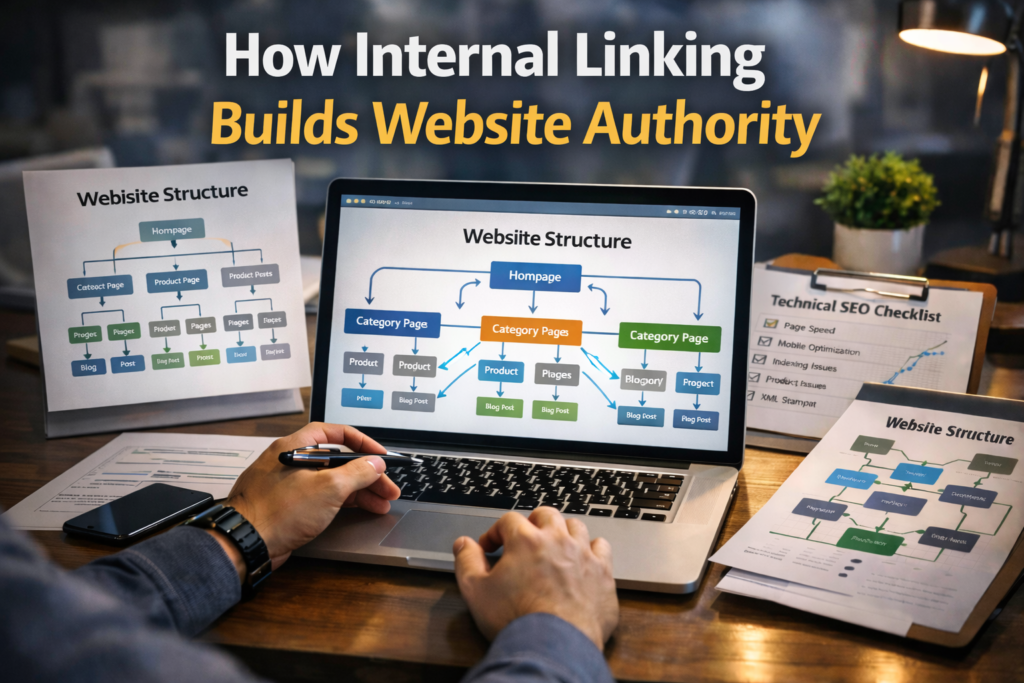
Reason #3 – Weak Internal Linking Structure
Internal linking plays a huge role in trust and understanding.
When pages are connected properly, Google can easily crawl your website and understand how topics relate to each other.
New websites often have:
-
Isolated pages
-
Weak linking between articles
-
No clear content structure
This makes it harder for Google to see the bigger picture.
A strong internal linking system tells Google:
-
Which pages are important
-
How topics connect
-
Where authority should flow
Without this structure, your website may look incomplete, even if the content is good.
Reason #4 – Limited Content Depth
New websites usually start with a few pages.
Maybe:
-
5–10 blog posts
-
1–2 service pages
-
A homepage
From Google’s perspective, this is not enough to fully understand the value of the site.
Websites that rank well often have:
-
Detailed content clusters
-
Supporting articles
-
Deep topic coverage
This creates confidence.
When Google sees a website covering a topic from multiple angles, it understands that the site is serious and knowledgeable.
Without enough depth, it’s hard to build trust.
Reason #5 – Low User Signals
User behavior also plays a role in trust.
Google pays attention to things like:
-
How long people stay on a page
-
Whether they explore more content
-
Whether they return to the site
For new websites, traffic is usually low. That means fewer user signals.
Without strong user interaction data, Google has less evidence that your site is helpful.
As traffic slowly increases, these signals begin to grow. And with them, trust grows too.
Reason #6 – No Brand Presence Yet
Established websites often have brand recognition.
People search for them by name.
They get mentions.
They get references.
New websites have none of that.
From Google’s point of view, a new site is just another unknown domain.
Until it starts building a presence, trust builds slowly.
How to Fix This: Building Google’s Trust Step by Step
The good news is that trust can be built. And when it starts building, growth becomes faster and more stable.
Here’s what helps.
1. Stay Consistent With Your Topic
Focus on one niche.
If your website is about SEO, stay within that world.
Write about:
-
On-page SEO
-
Technical SEO
-
Site structure
-
Ranking problems
-
Conversion issues
This creates a clear identity.
Over time, Google begins to understand exactly what your website stands for.
2. Publish Content Regularly
Consistency shows commitment.
When Google sees new content appearing regularly, it understands that the website is active and growing.
This builds long-term confidence.
You don’t need to publish daily. Even weekly consistency sends strong signals.
3. Build Strong Internal Connections
Link your articles to each other.
Connect:
-
Blog posts
-
Service pages
-
Related topics
This helps Google move through your site easily and understand your content structure.
It also keeps visitors engaged longer.
4. Create Depth, Not Just Quantity
It’s not just about publishing more. It’s about covering topics deeply.
Instead of writing random posts, build content around your core subject.
For example:
-
A main article
-
Supporting articles
-
Problem-focused posts
-
Solution-based guides
This creates authority over time.
5. Improve User Experience
Make your website easy to use.
-
Fast loading speed
-
Clean design
-
Mobile-friendly layout
-
Clear navigation
When users feel comfortable on your site, they stay longer. That sends positive signals to Google.
6. Be Patient and Stay Active
Trust is not built overnight.
Many new websites expect quick results. But real SEO growth often starts slowly.
The early months are about:
-
Building structure
-
Publishing content
-
Creating clarity
Once Google starts understanding your site, progress becomes more noticeable.
What Happens When Google Starts Trusting Your Website
Once trust begins to build, things start to change.
Pages get indexed faster.
Rankings improve gradually.
Traffic starts growing steadily.
More importantly, your website becomes more stable in search results.
This is the stage where real growth begins.
And it usually comes from consistent effort, not shortcuts.
The Role of a Strong Foundation
Many new websites focus only on keywords.
But trust comes from the full picture:
-
Structure
-
Clarity
-
Consistency
-
Depth
-
Experience
When these elements come together, Google starts seeing your website as reliable.
In many website reviews, small gaps often hold back big potential. Once those gaps are fixed, progress becomes smoother.
That’s why building the right foundation early matters so much.
Conclusion: Trust Is Earned, Not Given
Every successful website was once new.
They all started with low traffic, slow rankings, and little visibility.
But over time, as they stayed consistent, focused, and active, Google began to trust them.
If your website is new and not ranking yet, it does not mean something is wrong. It simply means you are still in the trust-building phase.
Stay consistent.
Stay focused.
Keep improving your structure and content.
Trust grows step by step.
And once it grows, your website starts moving forward in ways that feel natural and steady.
That’s when SEO starts to show its real power — not as a quick result, but as a long-term growth engine.