
Introduction: The Most Critical Phase of Any SEO Campaign
Most business owners think SEO success is decided months later — when rankings improve, traffic grows, and leads start coming in.
But the truth is very different.
In real SEO work, the first 30 days often determine the future of the entire project.
This early phase is where the foundation is built. It’s where hidden problems are discovered, structure is fixed, and strategy is defined. If this stage is done correctly, the next 6–12 months become much smoother. If it’s rushed or ignored, progress becomes slow, unstable, and unpredictable.
Many clients expect immediate rankings. They think SEO starts with keywords, backlinks, or content publishing. But experienced professionals know that real SEO begins with something else entirely:
Understanding the website deeply before making changes.
The first month is not about chasing quick wins. It’s about building clarity, removing confusion, and creating a strong technical and structural base that Google can trust.
In this article, we’ll walk through what actually happens in the first 30 days of a real SEO project and why this phase is more important than most people realize.
Why the First 30 Days Matter So Much
Think of SEO like building a house.
You don’t start with decoration.
You don’t start with furniture.
You start with the foundation.
If the foundation is weak, everything built on top will eventually struggle.
The first 30 days are where that foundation is created.
This phase is about:
-
Understanding the website
-
Identifying technical problems
-
Studying the niche
-
Fixing structure
-
Aligning the content with real search intent
Many websites don’t fail because of competition. They fail because the early stage was rushed. Important issues remain hidden, structure stays confusing, and Google never fully understands the site.
That’s why experienced SEO professionals spend significant time on analysis, planning, and fixing the basics before thinking about aggressive growth strategies.
Week 1: Deep Website Analysis and Discovery
The first week is all about understanding the website as it truly is — not how it looks from the outside, but how it performs internally.
This is where the audit process begins.
A real SEO project starts with questions like:
-
How is the website structured?
-
Are pages properly indexed?
-
Is the site easy for Google to crawl?
-
Are there technical errors slowing performance?
-
Is the content aligned with the right audience?
This stage reveals problems that business owners often don’t see.
In many cases, websites already have content, services, and design in place. But hidden technical gaps quietly block growth. These issues might include slow loading speed, poor internal linking, unclear page hierarchy, or confusing navigation.
Week 1 is about observation, not action.
The goal is to fully understand what exists before making any changes.
Understanding the Business and Its Audience
A real SEO strategy cannot be built without understanding the business itself.
In the first days of the project, a strong focus is placed on learning:
-
Who the target audience is
-
What problems they are trying to solve
-
How they search online
-
What makes them trust a service
SEO is not just about ranking pages. It’s about connecting a business with the right people.
If the audience is misunderstood, even high rankings may not lead to conversions.
That’s why this stage is about aligning the website’s message with the real needs of the audience.
Week 2: Technical SEO Fixes and Structural Improvements
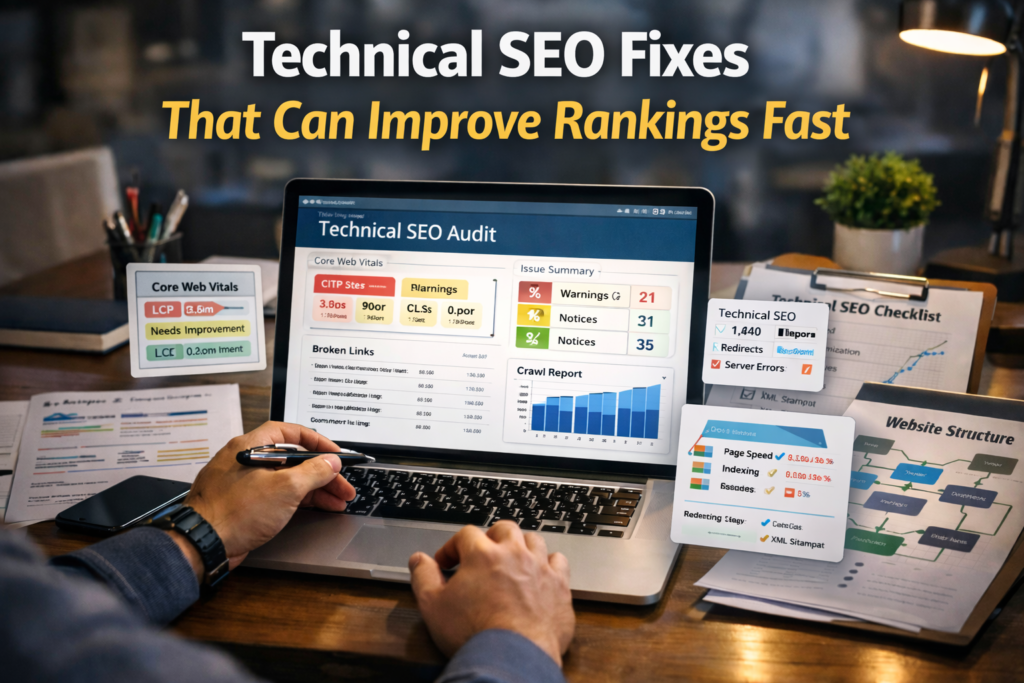
Once the audit reveals what’s happening behind the scenes, the second week often focuses on fixing technical and structural issues.
This is one of the most important phases.
Technical SEO ensures that Google can:
-
Crawl the site easily
-
Understand page relationships
-
Index content correctly
-
Navigate the structure smoothly
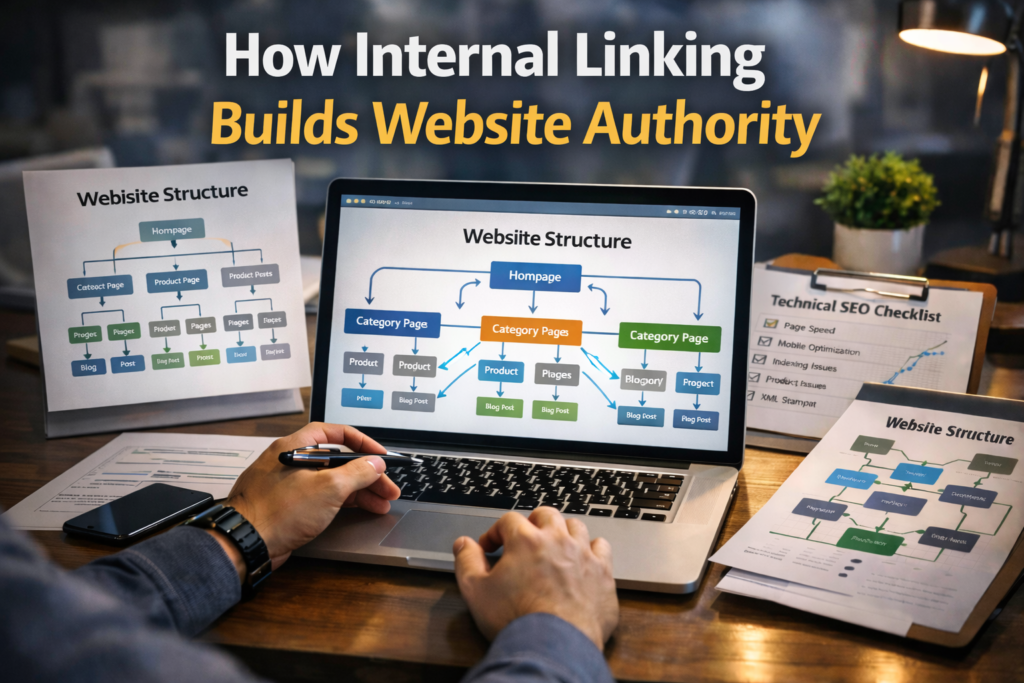
Many websites struggle because Google cannot clearly interpret how the pages connect.
Common structural problems found early in projects include:
-
Weak internal linking
-
Duplicate page confusion
-
Poor site hierarchy
-
Unclear navigation paths
Fixing these issues doesn’t always show immediate ranking changes. But it builds the clarity Google needs to trust and understand the website.
This stage is about making the site easier to read — not just for people, but for search engines.
Improving Site Clarity and Page Focus
Another major focus in the second week is page clarity.
Many service pages try to do too much at once. They mix multiple ideas, target unclear audiences, and fail to explain their value properly.
This confuses both visitors and search engines.
In the first 30 days, pages are often reviewed to ensure:
-
Each page has a clear purpose
-
Each page targets a specific problem
-
The message is simple and focused
-
Visitors can quickly understand what the business offers
Clarity builds trust.
When Google clearly understands what a page is about, ranking becomes easier. When visitors clearly understand the value, conversions improve.
Week 3: Keyword Strategy and Search Intent Alignment
Many people think SEO begins with keyword research.
But in real projects, keyword strategy becomes powerful only after the site is properly understood and structured.
By the third week, the focus shifts to understanding how real people search for services.
This stage is not just about collecting popular keywords. It’s about understanding intent.
There are different types of searches:
-
Informational searches
-
Problem-based searches
-
Service-focused searches
A strong SEO project aligns the website with keywords that attract the right audience — people who are closer to taking action.
This step ensures the site is not just getting traffic, but attracting relevant visitors.
Content Direction and Topic Planning
Once search intent becomes clear, content planning begins.
This doesn’t mean publishing dozens of articles immediately.
Instead, the goal is to build a logical content path that supports the main service pages.
This often includes:
-
Identifying core topics
-
Planning supporting articles
-
Strengthening topical authority
-
Connecting content through internal linking
This stage helps Google understand the depth and focus of the website.
Over time, this builds authority.
Week 4: Strengthening Trust Signals
By the fourth week, the website starts becoming clearer, stronger, and more structured.
Now the focus shifts to trust signals.
Trust is a key factor in SEO success.
Google wants to see consistency.
Visitors want to feel confident.
This stage often involves improving elements that build credibility:
-
Clear service explanations
-
Professional structure
-
Helpful content
-
Easy navigation
Even small improvements can make the website feel more reliable and stable.
What Clients Usually Expect vs Reality
Many clients expect:
-
Quick rankings
-
Instant traffic
-
Immediate leads
But real SEO doesn’t work that way.
The first 30 days are rarely about visible results. They are about preparing the website for long-term success.
During this phase, the most important changes are often invisible:
-
Structure becomes cleaner
-
Technical gaps are reduced
-
Clarity improves
-
Strategy becomes focused
These changes create the conditions for growth.
Without this preparation, later efforts become less effective.
Why Rushing the First Month Can Hurt Long-Term Growth
Some projects skip the early foundation work and jump straight into content publishing or link building.
This can create short-term movement, but it often leads to unstable results.
If the structure is weak, growth cannot be sustained.
If the message is unclear, traffic will not convert.
If technical gaps remain, Google will struggle to understand the site.
That’s why experienced professionals treat the first month as the most critical stage.
It sets the direction for everything that follows.
What Changes You May Notice After the First 30 Days
Even though dramatic ranking jumps may not happen immediately, you may start noticing subtle improvements.
These can include:
-
Better page indexing
-
Increased crawl activity
-
Improved site clarity
-
Stronger content direction
-
More focused traffic
These are early signals that the foundation is becoming stronger.
SEO growth often starts quietly before becoming more visible.
The Real Goal of the First 30 Days
The first month is not about quick wins.
It’s about building understanding.
Understanding:
-
The website
-
The audience
-
The structure
-
The intent
Once this clarity exists, growth becomes much more predictable.
This is why experienced SEO work always begins with analysis, planning, and fixing what’s already there before adding new elements.
How This Phase Impacts the Next 6–12 Months
A strong first 30 days can make the next months significantly more effective.
Because once the foundation is strong:
-
Content performs better
-
Rankings grow more naturally
-
Google understands the site faster
-
Authority builds steadily
It creates momentum.
And momentum is one of the most powerful forces in SEO.
Conclusion: The First 30 Days Decide the Direction
Real SEO success doesn’t start with rankings.
It starts with understanding.
The first 30 days are where the real work begins — not the visible kind, but the strategic kind.
This is where confusion turns into clarity.
Where hidden problems get discovered.
Where structure becomes stronger.
Every successful SEO project begins with this stage.
And while it may not always produce immediate results, it quietly builds the conditions needed for long-term growth.
When the foundation is set properly, everything that follows becomes more effective.
That’s why the first 30 days are not just the beginning of an SEO project — they are the phase that shapes its future.