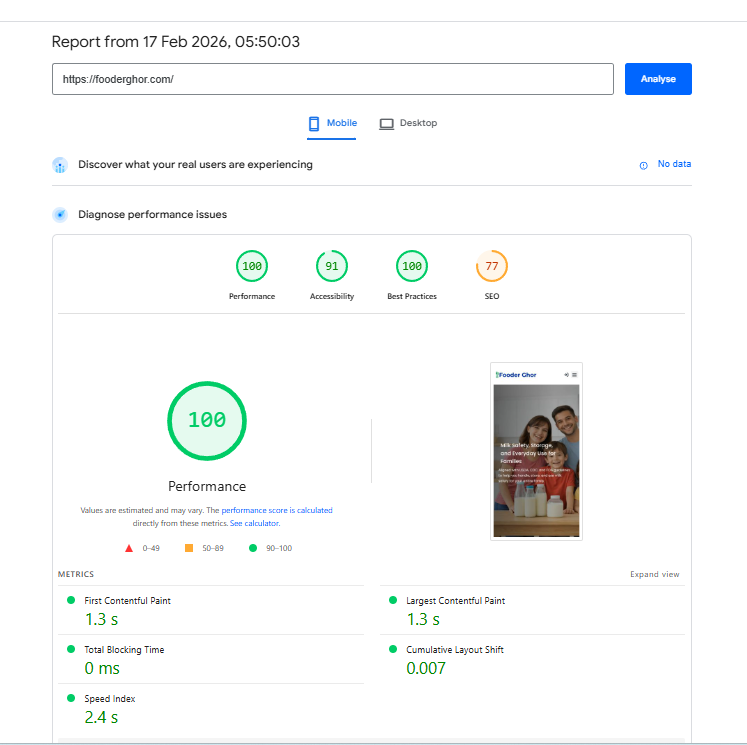
In this project, I optimized the website’s technical SEO and performance to improve loading speed, Core Web Vitals, and overall user experience. The goal was to create a fast, stable, and search-engine-friendly website structure.
Audited the website using performance testing tools.
Identified loading speed issues, render-blocking elements, and layout shift risks.
Goal: Detect technical problems affecting speed and UX.
Improved key performance metrics:
First Contentful Paint (FCP)
Largest Contentful Paint (LCP)
Cumulative Layout Shift (CLS)
Total Blocking Time (TBT)
Goal: Meet Google’s Core Web Vitals standards.
Applied technical improvements such as:
Image size optimization
Lazy loading setup
Script & CSS optimization
Reduced unnecessary code load
Goal: Faster page load and smoother experience.
Ensured mobile-first optimization
Improved mobile speed and responsiveness
Goal: Better performance for mobile users (Google’s primary index).
Improved site structure stability
Reduced layout shifting
Enhanced accessibility & best practice signals
Goal: Stronger technical SEO foundation.
Performance Score: 100
Accessibility: 91
Best Practices: 100
SEO Score: 77
LCP: 1.3s
CLS: 0.007
Total Blocking Time: 0 ms
The site achieved excellent performance metrics, creating a fast, stable, and user-friendly experience aligned with Google’s ranking signals.
Identifying the Key Problems
Strategy & Implementation
Measuring the Success