
On-Page SEO Optimization for Product Page
- 16 Feb 2026
- 11:38 PM
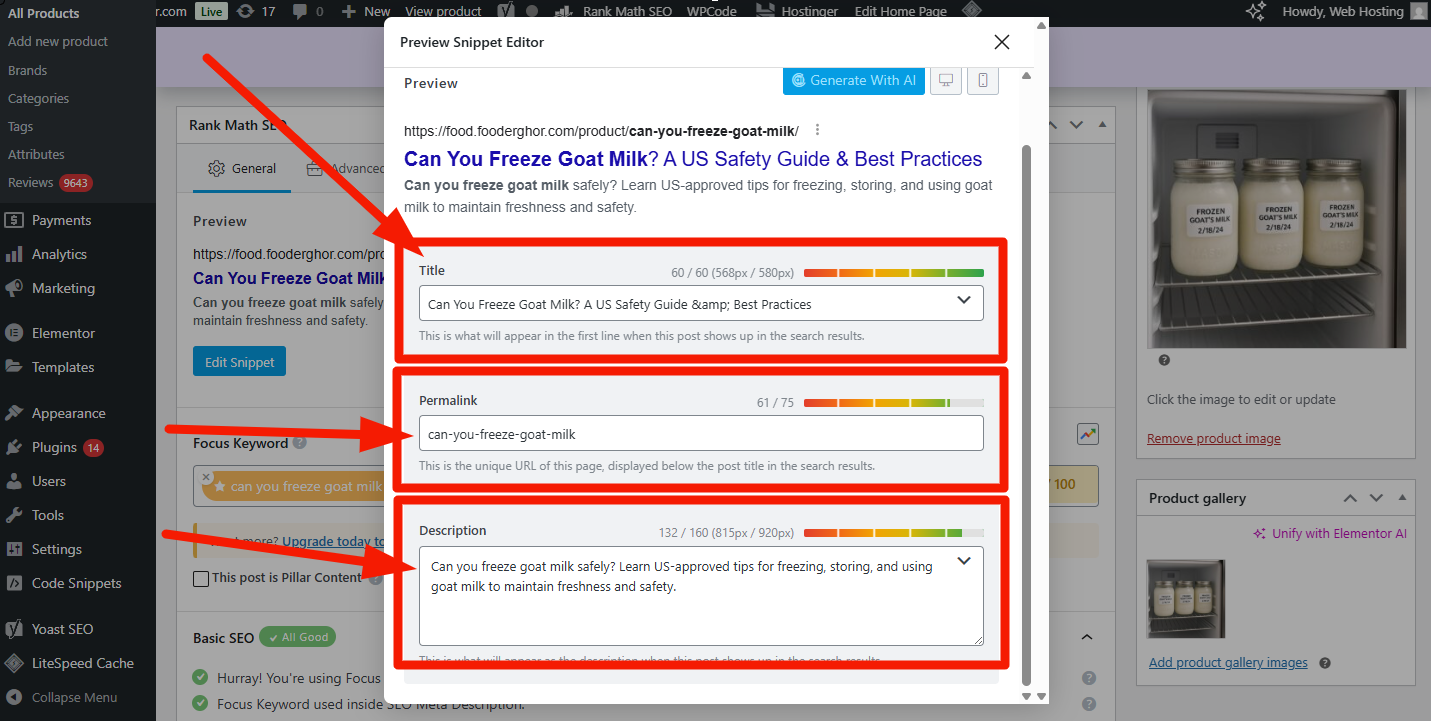
In this project, I optimized a product page using a complete on-page SEO and AEO (Answer Engine Optimization) strategy to help search engines clearly understand the topic, improve keyword relevance, and increase click-through potential from search results.
Project Overview
1) Keyword Research & Search Intent Alignment
I started by identifying the primary keyword and analyzing user intent behind the query. The target search phrase was informational and safety-focused, meaning users were looking for a clear, direct answer along with best practices.
Based on this, I structured the page to deliver an immediate answer first, followed by detailed guidance, safety tips, and supporting information. This improves both user satisfaction and search relevance.
2) Meta Title Optimization (Relevance + CTR Strategy)
I crafted a keyword-focused meta title designed to:
-
Place the main keyword at the beginning for stronger relevance signals
-
Add contextual modifiers like “Safety Guide” and “Best Practices” to match user intent
-
Keep the length within optimal limits to avoid truncation in search results
This helps search engines understand the core topic quickly while making the result more attractive to users.
3) Meta Description Optimization (Intent-Focused Messaging)
The meta description was written to:
-
Reflect the user’s main question in a natural way
-
Clearly explain what value the page provides
-
Encourage clicks by promising practical and trustworthy information
This improves click-through rate and sets the right expectations before users land on the page.
4) SEO-Friendly URL Structure
I optimized the permalink to be:
-
Short and clean
-
Keyword-focused
-
Easy to read and share
A simple, relevant URL helps search engines better understand the page topic and improves overall user trust.
5) Heading Tag Optimization (H1–H3 Content Structure)
I organized the content using a structured heading hierarchy:
-
H1: Main topic with primary keyword
-
H2: Supporting sections addressing key user concerns
-
H3: Subsections that break down details into scannable insights
This improves readability, content flow, and helps search engines understand content depth and context.
6) FAQ Section Implementation (Featured Snippet Opportunity)
I added an FAQ section targeting common user questions related to the main topic.
Each question was written in a natural query format, followed by clear and direct answers.
This strategy helps:
-
Increase chances of appearing in featured snippets
-
Capture long-tail keyword traffic
-
Improve topical coverage
7) AEO (Answer Engine Optimization) Strategy
To align with modern search behavior and AI-driven results, I optimized the content to deliver concise, direct answers early in the page.
This included:
-
Answering the main question in the first section
-
Using simple, clear explanations
-
Structuring content for quick extraction by search engines and AI tools
This increases the likelihood of the page being used in voice search, AI summaries, and quick answer results.
8) Overall Impact Focus
The overall goal of this optimization was to:
-
Improve topical clarity
-
Strengthen keyword relevance
-
Increase search visibility potential
-
Improve user engagement and trust
-
Enhance click-through performance from search results
This project demonstrates my ability to combine traditional on-page SEO with modern AEO strategies to build search-friendly, user-focused content structures.
Challenges
Identifying the Key Problems
Low Conversation Rate
Lack of Trust Signals
Poor Mobile Experience
Solutions
Strategy & Implementation

Improved Call-To-Actions

Added Trust Elements

Mobile Optimization
Results
Measuring the Success