Introduction: The Question Almost Every Website Owner Asks
If you talk to website owners who have been trying to grow online, you’ll notice a common pattern.
Some are focused on content.
Some are focused on keywords.
Some are focused on speed and technical fixes.
And almost all of them ask the same question at some point:
“Should I focus more on on-page SEO or technical SEO?”
It’s a valid question.
Because when you’re investing time, energy, and sometimes money into improving your website, you want to know what actually makes the difference.
What actually brings traffic?
What builds trust?
What brings real clients?
You might have heard different opinions.
Some people say content is everything.
Others say technical SEO is the real backbone.
Some say without keywords nothing works.
Some say without speed and structure nothing ranks.
So what’s the truth?
The reality is more practical and more human than most SEO discussions make it sound.
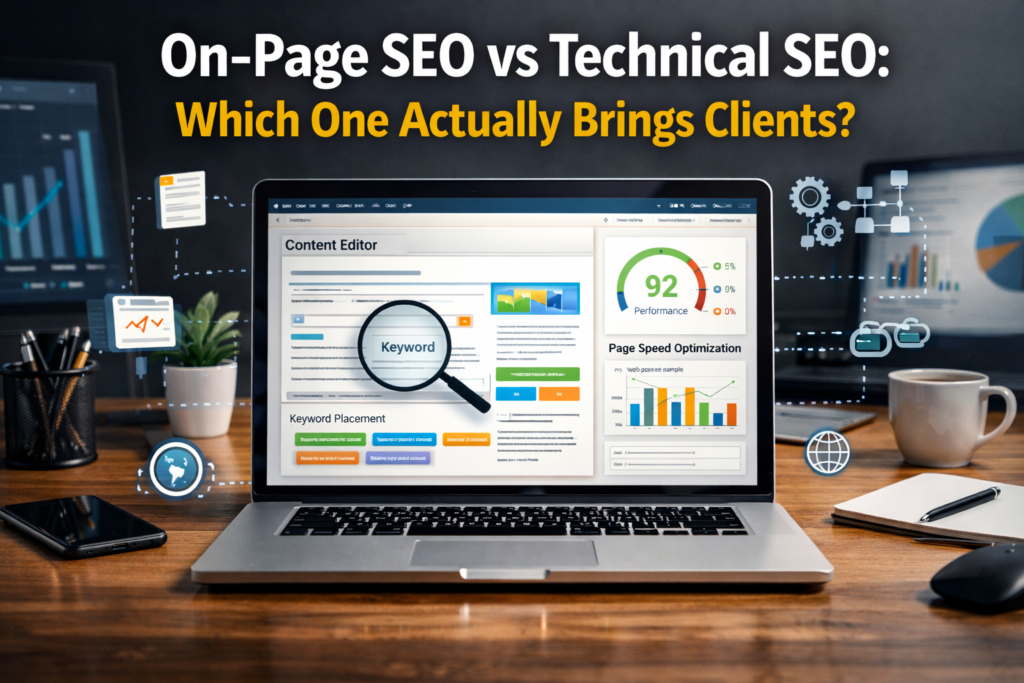
On-page SEO and technical SEO are not competitors. They are partners. But they don’t play the same role in bringing clients.
One helps Google understand your message.
The other helps Google trust your website.
And when both work together, that’s when real growth starts.
In this article, we’ll break down the real difference between on-page SEO and technical SEO, how each one affects rankings, and most importantly — which one actually plays the bigger role in turning visitors into clients.
Understanding On-Page SEO in Simple Terms
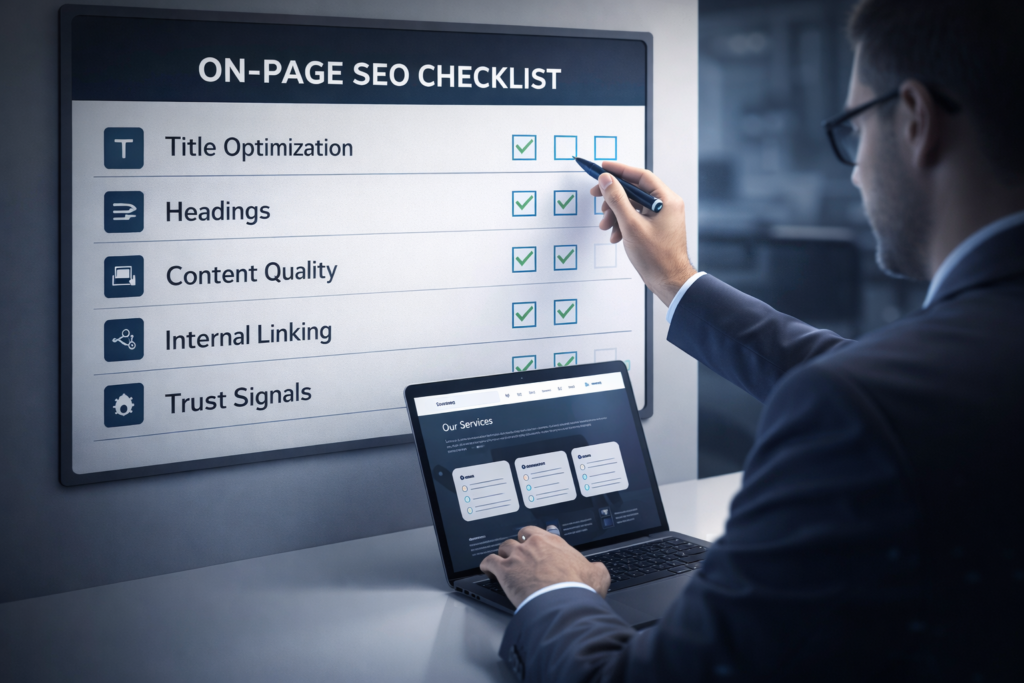
On-page SEO is everything you control directly on a page.
It’s how you write.
How you structure.
How you explain your service.
How you use keywords.
It includes things like:
-
Headlines and subheadings
-
Keyword placement
-
Content clarity
-
Page structure
-
Internal linking
-
User-focused writing
But more than anything, on-page SEO is about communication.
It helps Google understand:
-
What your page is about
-
Who it is for
-
What problem it solves
And it helps visitors understand the same things quickly.
A strong on-page setup makes your page feel clear, focused, and helpful.
And when people understand your value, they stay longer.
What Technical SEO Really Means
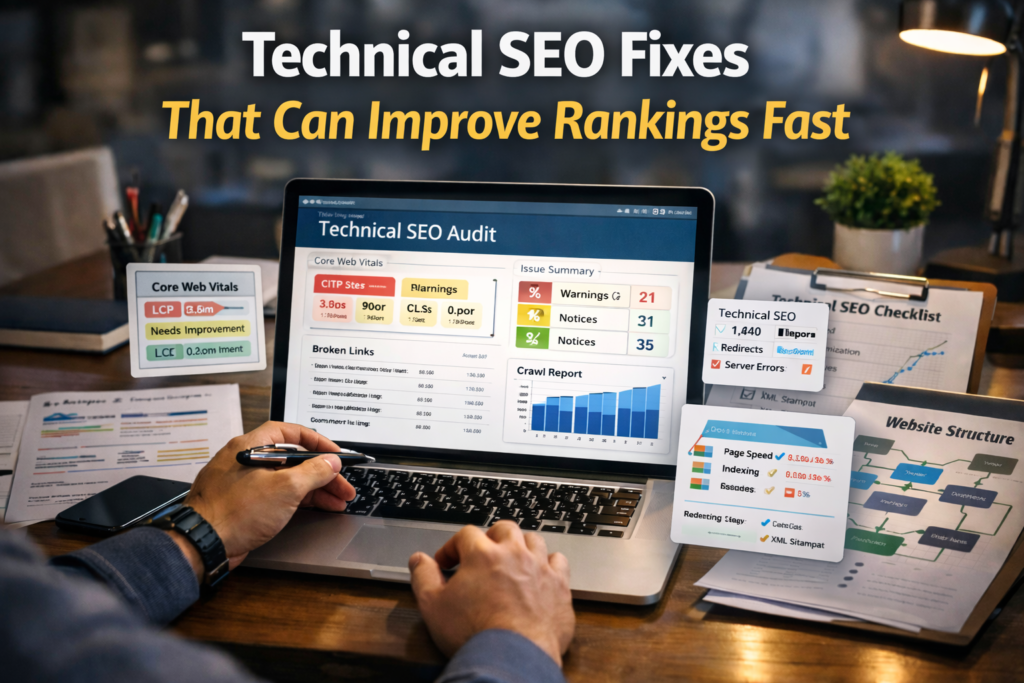
Technical SEO is everything that happens behind the scenes.
It’s not about what people read.
It’s about how search engines experience your website.
It includes things like:
-
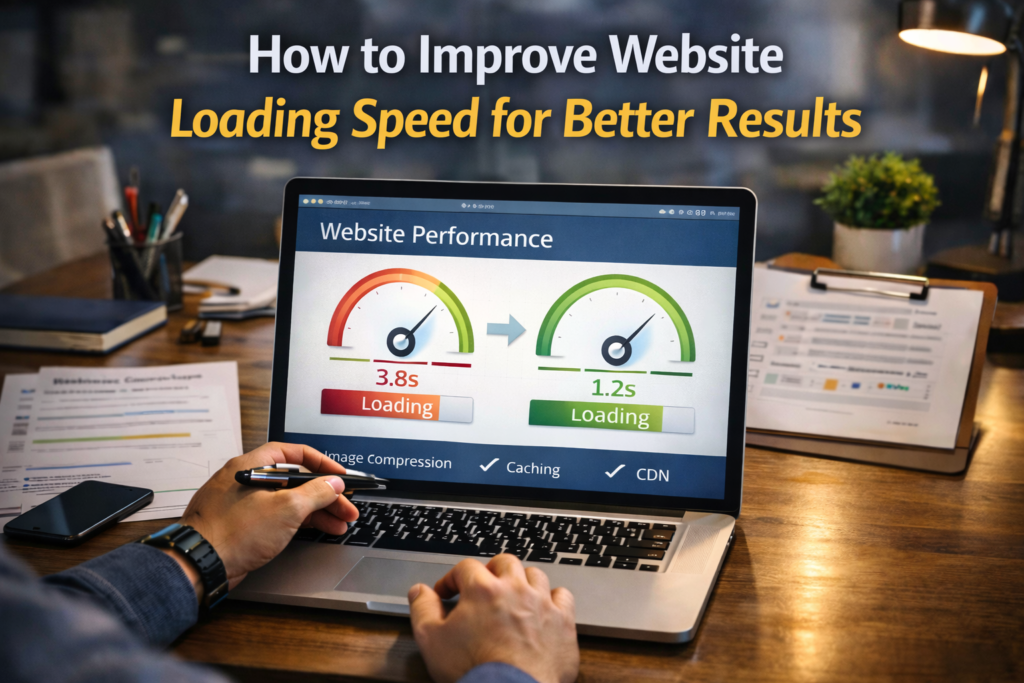
Website speed
-
Mobile friendliness
-
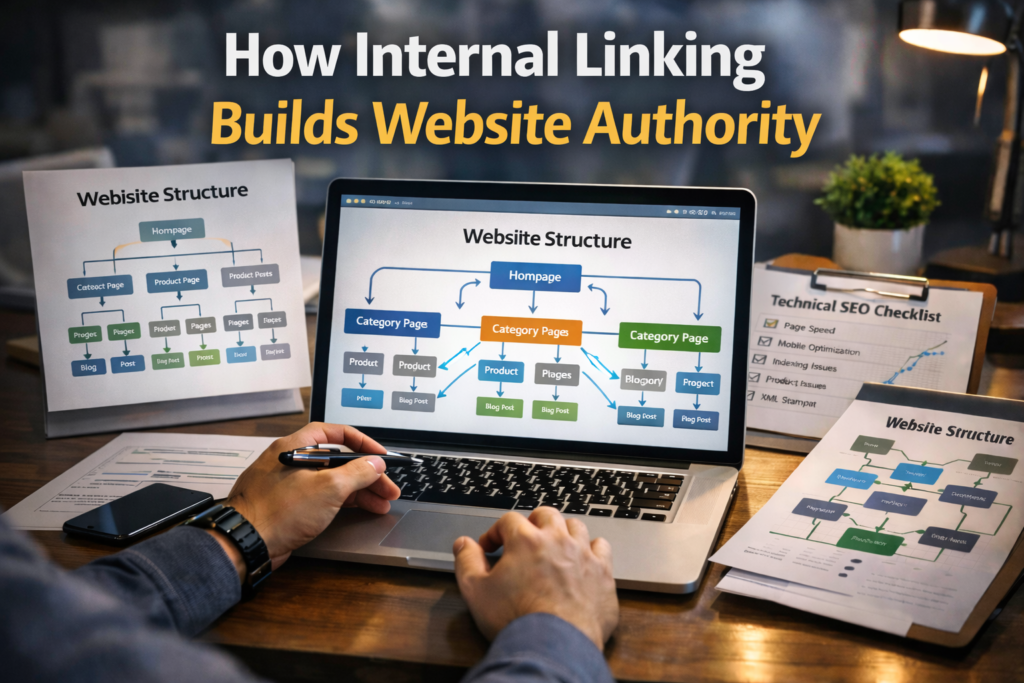
Clean site structure
-
Crawlability
-
Indexing clarity
-
Page loading stability
-
URL structure
Visitors may not notice technical SEO directly.
But they feel it.
If a site is slow, they feel it.
If navigation is confusing, they feel it.
If pages load badly on mobile, they feel it.
And Google notices all of that.
Technical SEO helps Google move through your website smoothly and understand how your pages connect.
Without technical clarity, even great content can struggle.
Why This Debate Exists in the First Place
The reason people compare on-page SEO and technical SEO is because both are essential — but they influence results in different ways.
Some websites have strong content but weak structure.
Some have strong technical setups but weak messaging.
In both cases, something is missing.
And when something is missing, growth slows down.
Many people want a simple answer:
“Just do this, and clients will come.”
But SEO doesn’t work like that.
It works through balance.
What On-Page SEO Does Best
On-page SEO is strongest at one thing:
Helping your page connect with the right audience.
When done well, it helps you:
-
Target the right search intent
-
Speak directly to real problems
-
Build trust through clarity
-
Guide visitors toward action
For service websites, this is extremely important.
Because service pages don’t just need to rank. They need to convert.
If your message is weak, even strong rankings may not bring clients.
Visitors need to quickly understand:
-
What you offer
-
Why it matters
-
Why they should trust you
That’s the power of on-page SEO.
It turns visibility into connection.
What Technical SEO Does Best
Technical SEO is strongest at something different:
Making your website easy for Google to trust and understand.
It helps by:
-
Ensuring pages load fast
-
Making content accessible
-
Creating clean navigation paths
-
Helping search engines crawl the site smoothly
Without technical stability, Google may struggle to fully process your website.
Even if your content is excellent, technical confusion can hold it back.
Think of technical SEO like the foundation of a building.
If the structure is unstable, it doesn’t matter how beautiful the rooms are.
Can On-Page SEO Alone Bring Clients?
Yes — but only to a certain point.
If your content is very strong, clear, and focused, you can start attracting the right audience.
Visitors may begin to:
-
Stay longer
-
Explore more
-
Feel understood
This builds trust.
And trust can lead to inquiries.
But if technical problems exist, growth may feel limited.
The page may not rank as high as it should.
It may not get crawled properly.
It may load too slowly.
So on-page SEO can attract and convert — but technical support helps it grow faster.
Can Technical SEO Alone Bring Clients?
Not really.
Technical SEO helps rankings.
But it does not communicate value.
A perfectly fast, clean, well-structured page with weak content will not convince visitors.
It may get visibility.
But it won’t build connection.
And without connection, there are no clients.
Technical SEO prepares the road.
On-page SEO drives the conversation.
The Real Answer: Which One Actually Brings Clients?
If we answer this honestly:
On-page SEO is what directly brings clients.
Because clients don’t hire websites.
They respond to:
-
Clear messaging
-
Problem-focused content
-
Trust signals
-
Strong positioning
All of that lives inside on-page SEO.
But here’s the important truth:
Technical SEO makes sure people can actually reach that message.
So the real dynamic looks like this:
Technical SEO → helps pages rank
On-page SEO → helps pages convert
Without technical support, rankings may struggle.
Without on-page clarity, conversions may struggle.
But if your goal is clients, on-page SEO plays the bigger role.
What Happens When On-Page SEO Is Strong but Technical SEO Is Weak
In this situation, you might see:
-
Some traffic
-
Some engagement
-
Slow growth
The page might rank occasionally, then drop.
It may feel unstable.
Visitors who arrive may connect with your message. But getting consistent visibility becomes difficult.
This is where technical improvements help stabilize growth.
What Happens When Technical SEO Is Strong but On-Page SEO Is Weak
This is very common.
The website loads fast.
It’s mobile friendly.
It’s clean and structured.
But the service pages feel generic.
They don’t clearly explain:
-
Who the service is for
-
What problem it solves
-
Why it matters
In this case, rankings might come — but leads don’t.
Because visitors don’t feel convinced.
Why Service Websites Must Focus on Both
Service websites are different from content blogs.
Blog posts can rank based on information.
Service pages must do more.
They must:
-
Rank
-
Build trust
-
Connect emotionally
-
Show clarity
That’s why both technical and on-page SEO matter.
Technical builds access.
On-page builds confidence.
Together, they build growth.
The First 60 Days: Where Each One Plays a Role
In real projects, technical SEO often gets attention early.
Because fixing structure, crawlability, and clarity helps set the stage.
Then on-page improvements strengthen messaging.
Over time:
-
Technical clarity supports rankings
-
On-page clarity supports conversions
This creates balance.
How Visitors Actually Experience the Difference
Visitors don’t think about SEO terms.
They simply feel the result.
If a page loads fast, they stay.
If it feels clear, they trust.
If it speaks to their problem, they connect.
All of these moments together shape their decision.
That’s why SEO is not just about algorithms.
It’s about experience.
Why Many Websites Focus Too Much on One Side
Some websites focus only on content.
They write constantly. Add keywords. Publish blogs.
But ignore structure.
Others focus only on technical improvements.
They optimize speed. Clean the backend. Improve performance.
But forget to strengthen messaging.
Both approaches create imbalance.
And imbalance slows growth.
Where Real Growth Starts
Real growth begins when:
-
The website is technically stable
-
The content is clear and focused
-
The message is strong
-
The structure is easy to follow
This is where Google feels confident.
And where visitors feel comfortable.
The Hidden Truth: Conversion Lives Inside On-Page SEO
If your goal is:
-
Leads
-
Clients
-
Inquiries
Then the real power sits inside on-page SEO.
Because this is where you:
-
Explain your value
-
Show understanding
-
Guide decisions
Technical SEO supports this.
But it does not replace it.
Conclusion: It’s Not a Competition — It’s a Partnership
So which one actually brings clients?
The honest answer is:
On-page SEO creates connection.
Technical SEO creates access.
You need both.
But if we look at the final step — the moment a visitor decides to contact you — that moment is influenced by on-page clarity.
That’s where trust forms.
That’s where confidence builds.
And that’s where a visitor turns into a client.
When both technical strength and on-page clarity work together, the result feels natural.
Pages rank.
Visitors stay.
Trust grows.
And slowly, consistently, real business begins to follow.