Keyword Research Service
Stop Guessing, Start Ranking: Data-Driven Keyword Research for Massive Growth
Most websites don’t fail because of poor design.
They don’t fail because of weak content.
And they don’t fail because SEO doesn’t work.
They fail because they target the wrong keywords.
Every day, businesses publish articles, optimize pages, build backlinks, and still struggle to get traffic. They invest time, energy, and money into SEO but see little to no results. The real issue is not effort — it’s direction.
Without the right keyword strategy, even the best website can remain invisible.
Keyword research is not just about finding popular search terms. It is about understanding how people search, why they search, and what they expect to find. When done correctly, keyword research becomes the foundation of everything — content, structure, rankings, authority, and long-term growth.
I provide strategic, data-driven keyword research that helps businesses attract the right audience, build topical authority, and grow through sustainable organic search visibility.
This is not guesswork.
This is not random keyword collection.
This is a growth strategy.
Why Keyword Research Is the Foundation of SEO Success
Before any SEO campaign begins, there is one critical question:
What exactly are your customers searching for?
If you don’t know the answer, everything else becomes uncertain.
Without proper keyword research:
- Your content may never rank
- Your traffic may never grow
- Your website may attract the wrong audience
- Your SEO investment may not produce real returns
Keyword research acts as a roadmap. It shows you where to focus, what to build, and how to grow.
When done correctly, it helps you:
- Discover real demand in your niche
- Identify keywords people actually search
- Understand buyer intent
- Build content that ranks
- Target low-competition opportunities
- Create a long-term SEO plan
This is why every successful SEO strategy starts with deep, intelligent keyword research.
What Makes My Keyword Research Different
Most people use tools to collect keywords.
I use strategy to build growth.
There is a big difference.
Basic keyword lists often include:
- High search volume keywords
- Random variations
- No intent understanding
- No competition context
But real keyword research focuses on:
- Search intent
- User behavior
- Content gaps
- Competition strength
- Authority building opportunities
Instead of chasing random high-volume keywords, I focus on keywords that bring:
- Real traffic
- Targeted visitors
- Qualified leads
- Long-term authority
This approach helps businesses grow consistently instead of relying on short-term ranking tricks.
My Keyword Research Strategy: Built for Real Growth
I follow a structured and professional process to ensure every keyword has real value.
Step 1 — Understanding Your Business and Audience
Before researching keywords, I first understand:
- Your services
- Your target audience
- Your business goals
- Your niche competition
- Your growth direction
This helps ensure that the keyword strategy aligns with your real business objectives.
Step 2 — Deep Competitor Analysis
Your competitors are already showing what works.
I analyze:
- Which keywords they rank for
- Which pages bring them traffic
- Where they are weak
- Where opportunities exist
This gives us a strategic advantage before we even start.
Local Keyword Research (For Location-Based Businesses)
Not every business targets a global audience.
Many of my clients run local businesses that depend on location-based searches to attract nearby customers.
I also specialize in local keyword research to help businesses rank in specific cities, regions, and service areas.
This includes finding:
- “Near me” search keywords
- City-based service terms
- Location + service combinations
- Local intent search queries
Examples:
- Dentist in New York
- SEO expert in Dhaka
- Restaurant near me
- Local plumber in London
Local keywords are extremely powerful because they target users who are ready to take action in a specific area.
These searches often bring:
- Direct calls
- Local inquiries
- High-conversion traffic
If your business depends on local customers, location-focused keyword research can become one of the strongest growth drivers.
What Happens If You Ignore Keyword Strategy?
(The Real Cost of Inaction)
Many websites invest months into content, SEO tools, and optimization — but still fail to see results.
Not because SEO doesn’t work.
But because there was no keyword strategy from the beginning.
When you ignore proper keyword research:
- You spend months writing content that no one searches for
- You build backlinks to pages that never rank
- You target keywords that are too competitive
- You waste money on SEO tools without a clear direction
- You attract traffic that never converts into customers
This leads to frustration, confusion, and slow growth.
SEO works best when every page, every article, and every effort is guided by real search data.
Without a keyword plan, you are guessing.
And guessing is expensive.
Pro Tip
“Ranking #1 for a keyword with no intent is like having a billboard in the middle of a desert. It looks impressive, but it brings no business.”
Competitor Analysis – What I Actually Study
Competitor research is not just about checking which keywords they rank for.
I go deeper.
I study their strengths, weaknesses, and missed opportunities.
Here’s what I analyze:
1. Competitor Keyword Positions
- Which keywords bring them traffic
- Which pages rank best
- Which topics perform strongest
This shows us what already works in the market.
2. Backlink Profile Analysis
Backlinks are one of the biggest ranking factors.
I analyze:
- Which pages have the most backlinks
- Which keywords those pages rank for
- Where their links come from
This helps identify:
- Keyword strength levels
- Authority gaps
- Ranking difficulty
3. Content Length & Depth Comparison
Google prefers comprehensive content.
I compare:
- Word count
- Topic coverage
- Content structure
- Information depth
This helps create better, more complete content strategies.
4. Identifying Low Hanging Fruit Opportunities
This is one of the most powerful parts of competitor research.
Low hanging fruit means:
Keywords where competitors:
- Rank weakly
- Have thin content
- Lack optimization
- Ignore search intent
These are fast ranking opportunities.
Targeting these first can bring:
- Faster visibility
- Early traffic growth
- Quick wins
Step 3 — High-Intent Keyword Discovery
Not all keywords bring customers.
I focus on identifying:
- Buyer intent keywords
- Service intent keywords
- Problem-solution searches
- Decision-stage keywords
These are the keywords that bring people who are ready to take action.
Step 4 — Long-Tail Keyword Expansion
Long-tail keywords are powerful because they:
- Have lower competition
- Rank faster
- Bring targeted traffic
- Convert better
For new and growing websites, long-tail keywords are often the fastest path to visibility.
Step 5 — Keyword Difficulty (KD) Analysis Strategy
Keyword difficulty is one of the most important factors.
I don’t just collect keywords. I analyze ranking feasibility.
For new websites:
- Focus on low KD keywords
- Faster ranking potential
- Early traffic growth
For growing websites:
- Mix of medium + competitive keywords
- Balanced growth strategy
This prevents wasted effort on impossible targets.
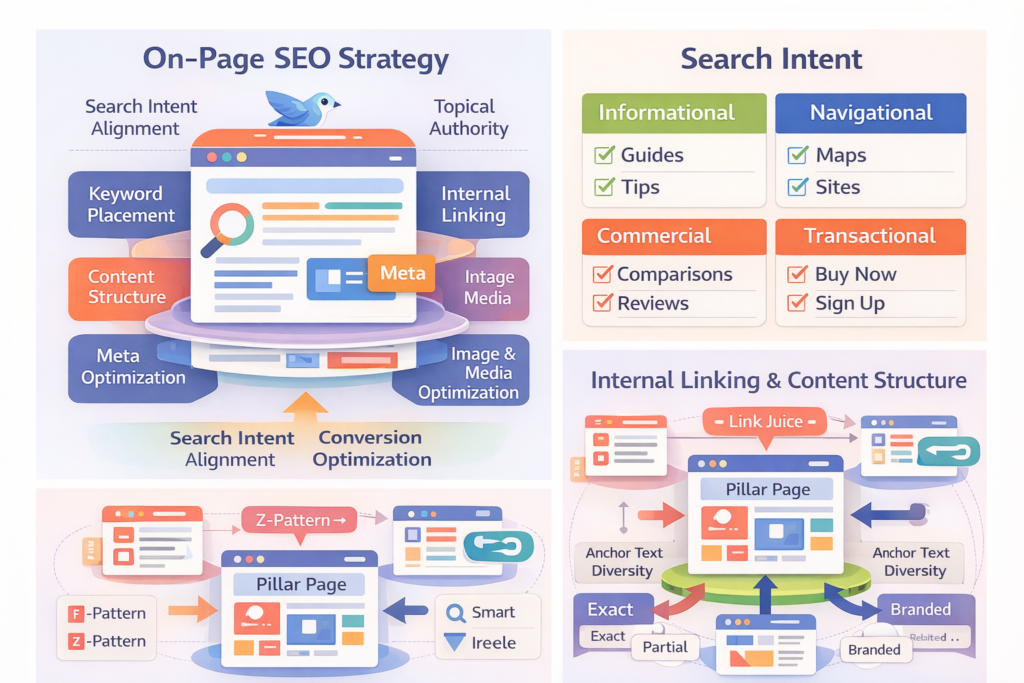
Step 6 — Search Intent Mapping
Every keyword has a purpose.
I categorize keywords into:
- Informational intent
- Commercial intent
- Transactional intent
- Navigational intent
This ensures the right keyword is matched to the right page.
Search Intent Analysis (Psychology-Driven Keyword Strategy)
Understanding search intent is the most important part of modern keyword research.
Because people don’t just search words — they search with a purpose.
If we don’t understand the psychology behind a search query, even the best keywords may fail to bring results.
I carefully categorize and analyze keywords based on user intent to make sure your content targets the right stage of the customer journey.
Informational Intent (Awareness Stage)
These are searches where users are looking to learn something.
Examples:
- “What is SEO?”
- “How keyword research works”
- “Best digital marketing tips”
Why these keywords matter:
Informational keywords are the foundation of blog content. They bring early-stage visitors who are still learning, researching, and trying to understand their problems.
These users are not ready to buy yet. But they are valuable.
Because:
- They build traffic
- They build trust
- They build authority
- They introduce your brand
When your website consistently answers their questions, Google starts seeing you as an authority in your niche.
Over time, these visitors return when they are ready to take action.
This is why informational keywords are essential for:
- Blog strategies
- Authority building
- Topical dominance
They are the starting point of the SEO funnel.
Commercial Intent (Consideration Stage)
These are searches where users are comparing options before making a decision.
Examples:
- “Best SEO expert”
- “Keyword research service review”
- “Top digital marketing agencies”
At this stage, users already know their problem.
Now they are researching solutions.
They are reading:
- Reviews
- Comparisons
- Case studies
- Expert recommendations
These keywords are powerful because they target people who are getting close to making a decision.
Why commercial keywords matter:
- Users spend more time reading
- They compare services
- They evaluate credibility
- They look for proof
This is where your content should show:
- Experience
- Results
- Trust
- Expertise
Commercial intent keywords help position your brand as a serious option.
They don’t bring instant sales, but they strongly influence decision-making.
Transactional Intent (Decision Stage)
These are the most valuable keywords.
Because these searches come from users who are ready to take action.
Examples:
- “Hire SEO expert”
- “Keyword research service”
- “Buy SEO audit”
These users are no longer researching.
They are ready to:
- Contact
- Buy
- Book
- Hire
This is where real money comes from.
Transactional keywords bring:
- Direct leads
- Service inquiries
- Business conversions
This is why service pages must target these keywords.
If informational keywords build traffic, transactional keywords build revenue.
And a smart SEO strategy always balances both.
Navigational Intent (Brand Discovery Stage)
These are searches where users are trying to find a specific brand, person, or website directly.
Examples:
- “Tanvir Hushan”
- “Ahrefs login”
- “Google Search Console”
- “Tanvir Hushan SEO expert”
These users already know what they are looking for.
They are not researching.
They are trying to reach a specific destination.
Why navigational keywords matter:
Navigational searches are powerful signals of brand authority.
When people search for your name, your brand, or your website directly, it shows:
- Brand awareness is growing
- People remember your name
- Trust is being built
- Google recognizes you as an entity
For personal brands and service providers, this is extremely important.
Because when someone searches:
- Your name
- Your company
- Your service + brand
It means they already trust you enough to look for you directly.
This type of search helps:
- Strengthen personal branding
- Improve credibility
- Increase direct traffic
- Build long-term recognition
Over time, strong navigational search signals tell Google that your brand is real, active, and trusted in your niche.
Step 7 — Topical Authority & Content Gap Analysis
Modern SEO is no longer about ranking for one keyword.
Google rewards topical authority.
I identify:
- Content gaps in your niche
- Missing topic opportunities
- Competitor content weaknesses
- Cluster topic ideas
This helps build strong authority across your entire niche.
Step 8 — Keyword Clustering & Topic Mapping
Instead of giving random keyword lists, I organize keywords into:
- Topic clusters
- Content groups
- Page targeting strategy
- Authority building roadmap
This creates a scalable content foundation.
Topic Clustering Strategy (With Example)
Modern SEO is not about ranking for one keyword anymore.
Google now prefers websites that show deep expertise across an entire topic.
This is called Topical Authority.
To build topical authority, I create keyword clusters.
Instead of targeting isolated keywords, I group related topics into a structured content system.
Example (Hypothetical Scenario)
Let’s say your main service is:
Digital Marketing
I would build a topic cluster around it like this:
Main Pillar Page:
- Digital Marketing Service
Supporting Cluster Pages:
- SEO Service
- Social Media Marketing
- Email Marketing
- Content Marketing
Then supporting blog topics under each:
SEO Cluster:
- Keyword research guide
- On-page SEO basics
- Technical SEO checklist
SMM Cluster:
- Instagram marketing tips
- Facebook ad strategy
Email Cluster:
- Email campaign examples
- List building strategies
This creates a connected knowledge structure.
Google starts seeing your website as a complete resource in that niche.
That leads to:
- Stronger rankings
- More authority
- Long-term traffic growth
This is how professional SEO strategies dominate search results.
What You Will Get
You will receive a complete keyword strategy package including:
- High-intent keyword list
- Long-tail keyword opportunities
- Keyword difficulty analysis
- Competitor keyword insights
- Search intent mapping
- Content topic ideas
- Topic clusters
- SEO growth direction
Everything will be structured and ready to implement.
Packages & Research Levels
To make things simple and flexible, I offer different levels of keyword research.
Basic Research Package
Perfect for small websites and startups.
Includes:
- 10–15 high-value keywords
- Competitor insights
- Low competition focus
- Keyword intent overview
Ideal for testing SEO direction.
Standard Research Package
Best for growing websites and service businesses.
Includes:
- 30–50 targeted keywords
- Search intent mapping
- Content suggestions
- Growth opportunities
Helps build a solid SEO foundation.
Premium Research Package
Best for long-term SEO strategy.
Includes:
- Full niche research
- Topic clustering
- Content gap analysis
- Topical authority planning
- Long-term SEO roadmap
Designed for serious growth.
Social Proof Section (Trust Builder)
People trust data.
You can include here:
- Client testimonials
- Ranking improvement screenshots
- Case study summaries
- Keyword growth results
You can also add a button:
Download Sample Keyword Research Report
This builds instant credibility.
Who This Service Is Perfect For
This service is ideal for:
- New websites starting SEO
- Service businesses
- E-commerce stores
- Bloggers
- Startups
- Personal brands
Anyone serious about organic growth needs keyword research.
How Keyword Research Drives Business Growth
With the right keywords:
- Your pages rank faster
- Your traffic becomes targeted
- Your content performs better
- Your authority increases
- Your leads improve
Instead of guessing, you follow real data.
Tools & Data Sources I Use
I use trusted industry tools to ensure accuracy:
- Ahrefs
- Google Keyword Planner
- Google Search Console
- Competitor analysis tools
But tools alone are not enough.
Strategy makes the difference.
Tools I Use (And Why I Use Them)
I don’t just use tools to collect data.
I use them to build strategy.
Each tool serves a specific purpose.
Ahrefs
I use Ahrefs for:
- Deep keyword difficulty analysis
- Backlink profile insights
- Competitor keyword tracking
- Content gap discovery
It helps me understand how strong the competition is and where opportunities exist.
Google Keyword Planner
This tool helps with:
- Real search volume insights
- Keyword demand validation
- Market interest patterns
It ensures that the keywords we choose have real demand.
Google Search Console
This is one of the most powerful data sources.
I use it to find:
- Keywords your site is already appearing for
- Pages close to ranking
- Hidden opportunities
These are often the easiest wins.
Because your site already has some visibility there.
Competitor Research Tools
These help identify:
- Content gaps
- Ranking opportunities
- Market direction
But tools alone don’t create strategy.
Understanding search behavior, psychology, and business goals is what turns data into real growth.
Why Businesses Choose My Keyword Research
My approach focuses on:
- Real search behavior
- Business-aligned strategy
- Growth-focused planning
- Authority building direction
I don’t just give keywords.
I give direction.
Frequently Asked Questions (FAQ)
How long does it take for keywords to rank?
Ranking depends on competition, domain authority, and content quality. Low competition keywords often rank faster.
Do you focus on low competition keywords?
Yes. Especially for new sites, I prioritize low KD opportunities.
Do you provide content ideas with keywords?
Yes. I include topic suggestions and cluster planning.
Do you work in all niches?
Yes. I research across multiple industries.
What tools do you use?
I use professional SEO tools combined with manual strategy.
Is keyword research a one-time task?
No. It evolves as your site grows and new opportunities appear.
Ready to stop guessing and start ranking?
Get My Custom Keyword Strategy
or
Book a Free Consultation
Let’s build a strong keyword foundation that supports long-term SEO growth, authority, and real business results.